The solution to homelessness is not as complicated as we’re making it. Though the problem of homelessness is seemingly intractable, the approach to ending it is actually straightforward. It is a matter of defining a comprehensive shared vision with meaningful goals, establishing a clear chain of command, and creating an effective and accountable governance structure led by independent subject matter experts. To date, Multnomah County has done none of these things, but they are eminently doable.
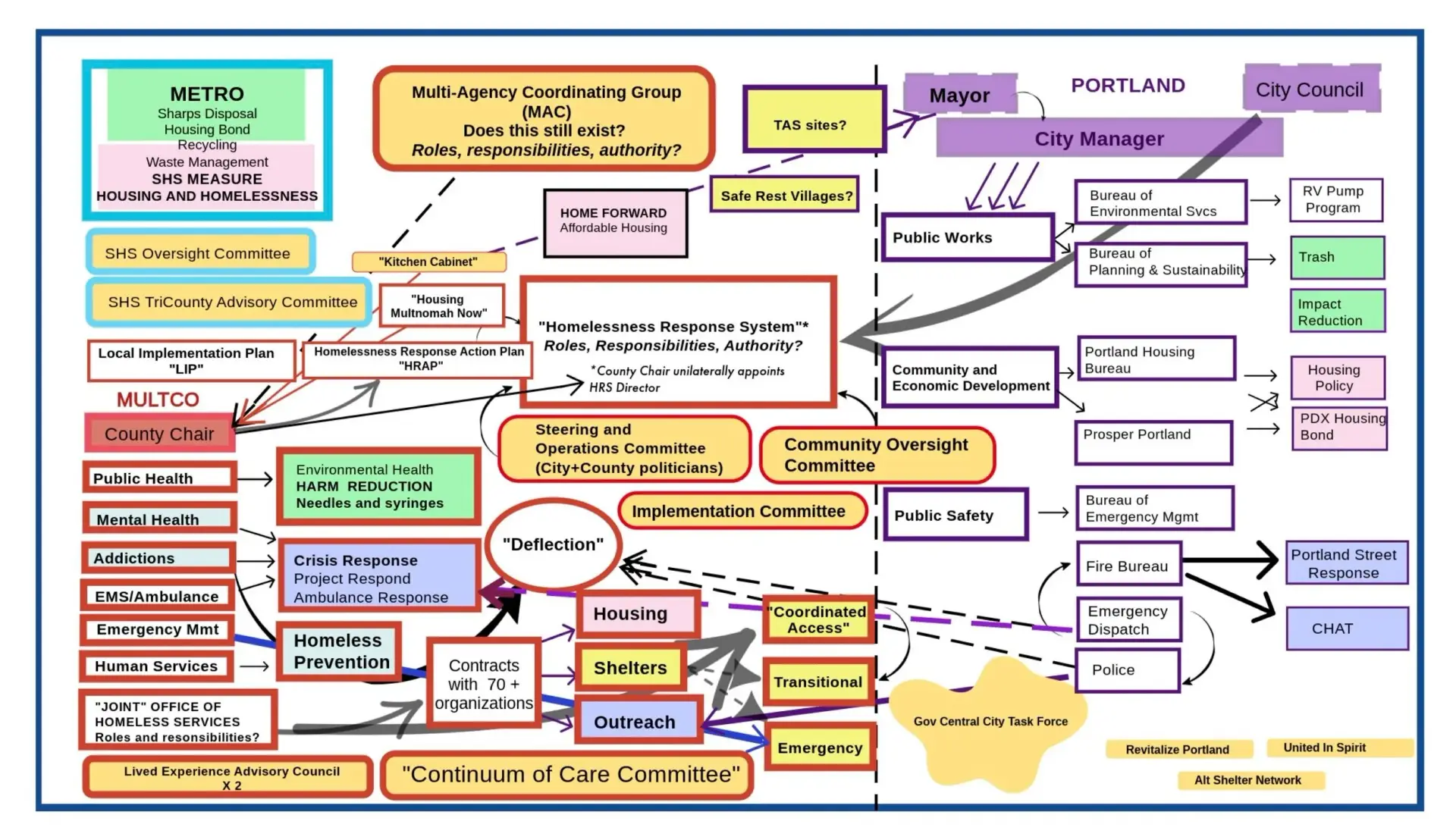
Money is not the problem. To effect meaningful change, we need a plan, we need data and analytics, we need accountability, and we need to understand Multnomah County itself. In order to create solutions for Multnomah County’s unique brand of homelessness, it is essential to bring policy, systems, and subject matter experts to the table. However, this alone is insufficient to achieve success. In order to build a system that will work, it is essential to understand Multnomah County itself, including its governance structure, its history, its funding and budgeting structures, the pivotal role it plays in regard to homeless services, and where it’s gone wrong.
Multnomah County plays a pivotal role in creating a comprehensive, holistic, and effective homelessness-to-housing (H2H) continuum. Multnomah County is responsible for homeless services, public health, mental health, and addictions, including crisis care, and human services including Veterans services, disability services, aging services, and domestic violence services. Multnomah County directly receives and allocates Metro Supportive Housing Services Measure funding which alone is expected to equal $1 billion over the life of the measure, in addition to the baseline billions of dollars in funding it already receives for homelessness and human services. Without understanding what has been happening in regard to the County’s use of resources, and what Multnomah County’s current governance, homeless services, and accountability structures are, no plan will be able to address the deficiencies that have led to our current state.
This document summarizes my approach to homelessness and connects the dots. Having spent eight years behind the curtain of local government as a Multnomah County Commissioner, and having worked on the front line as an ER doctor and street medicine volunteer, I bring a unique perspective, breadth and depth of experience to the question of how to solve homelessness in Multnomah County. This document describes the work I did as a commissioner to lay a foundation for transforming the way the County addresses homelessness. It includes a framework for building a successful H2H continuum. It focuses on particularly important components of the system, including data and analytics, a holistic shelter strategy, and moving people to the other side of the revolving door of homelessness to jails and ERs, rather than just building a bigger door. It points to needed overhauls of the budget process and county contracting. It identifies what the barriers have been to getting things done. And it proposes ways to overcome them.
I did not create this approach alone. My perspective and recommendations have evolved over years and have been informed by extensive engagement with people with lived experience of homelessness, front line providers, business owners, neighborhood associations, community members, philanthropists, affordable housing providers, academics, and others. I’ve relied on my interactions with thousands of patients who have experienced homelessness, including those I have treated on the streets. And I had a front row seat learning about County homeless services practices and policies, having served on the A Home For Everyone executive committee and coordinating board, having been involved in the development of the SHS measure and the County’s Local Improvement Plan, and having watched them play out in both the political arena and the real world.