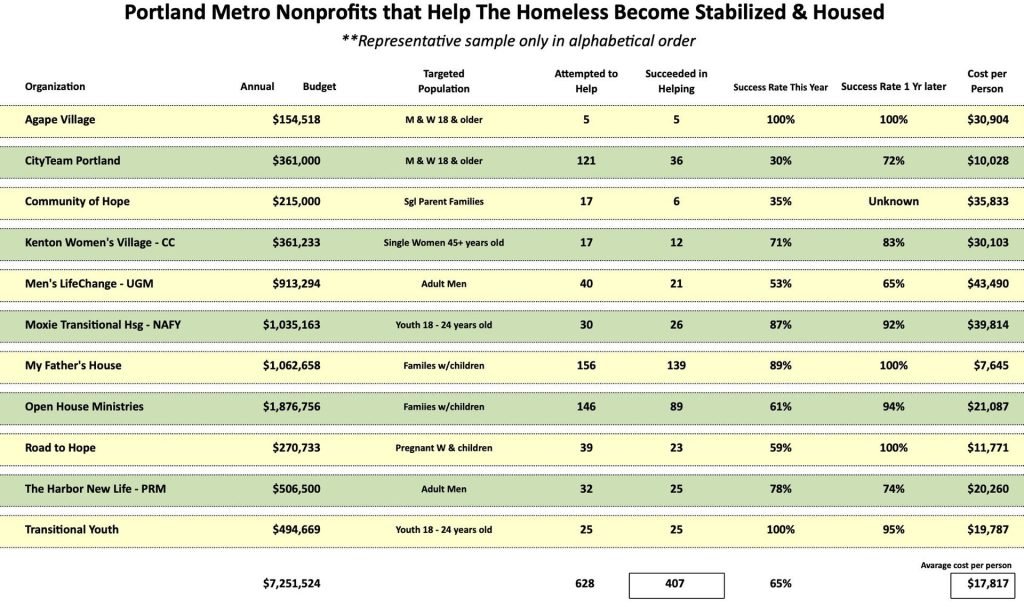
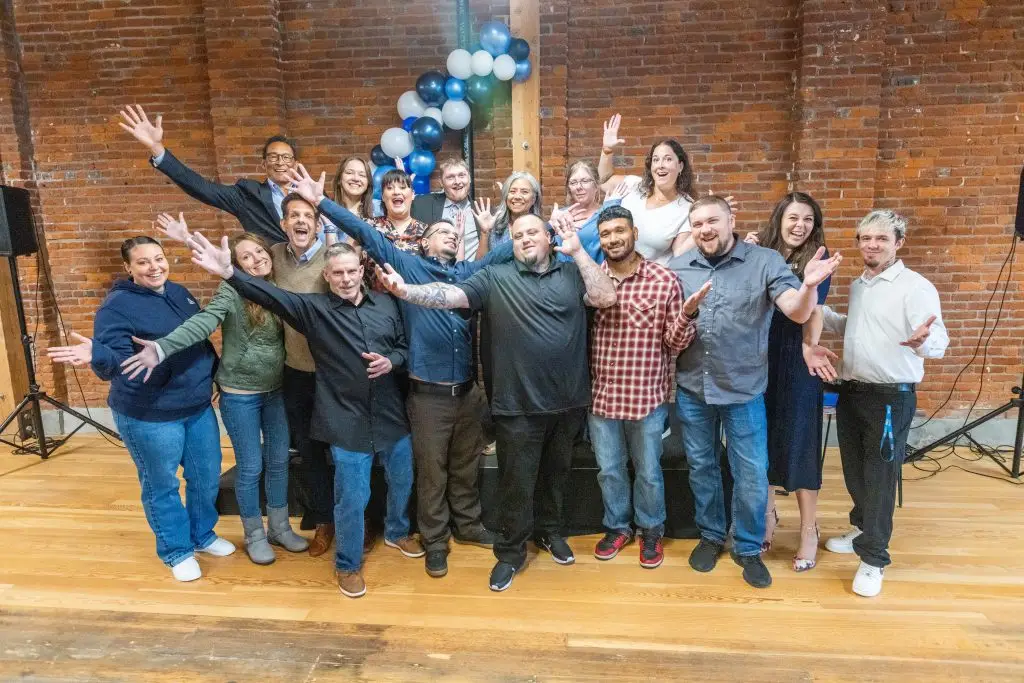
HHF only funds service providers that focus on “holistic recovery”: on addressing the root causes of homelessness to help their clients move from the streets to self-sufficiency, able to live on their own with minimal or no subsidies. This can require anything and everything from drug withdrawal and stabilization to budgeting lessons, job training, psychological counseling, and much else. Depending on the individual’s situation the process can take anywhere from a few weeks to 2 years. The end goal is that the individual graduates with a job, savings, and stable housing. A key metric is the number of clients that are working and in stable housing a year after graduating from the program.
“Harm reduction” activities (giving out food, water, clothing, etc.) are accepted only insofar as they are designed to bring the homeless into the larger program.
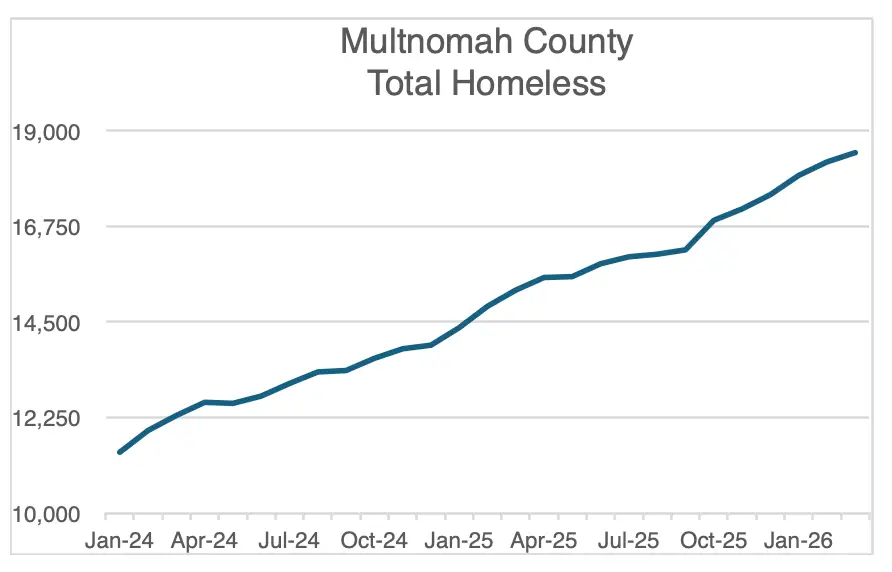
Multnomah County’s HSD (Homeless Services Department), on the other hand, funds harm reduction, shelters, housing placement, and other activities. The overall goal is placement into permanent housing, but individual service providers are not held to any standard. As a result, only about 12% of shelter residents got permanent housing. Worse yet, there is a large cohort of that return to homelessness from permanent housing (56% in 2025), so their actual long-term “success” rate is closer to 6%.
No attempt is made by HSD to evaluate the effectiveness of the harm-reduction activities they fund in terms of helping people get off the street. The only thing they measure is the number of contacts and how much and what was given out.