
First Step Reentry Navigation and Fund
Release day should be the beginning of a life, not the beginning of a countdown. First Step pairs each woman leaving Coffee Creek Correctional Facility with a peer navigator who has walked the same road, pays for the basics nobody else covers, and stays with her through the first ninety days and beyond.
Dignity comes first. Every woman we serve is treated as a person with a future, not a case to be managed. We serve women returning to Multnomah, Clackamas, and Washington counties, and we build a different plan for each one, because no two women come home to the same life.

Reentry is a process, not a moment.
For women leaving long-term incarceration, release day is the most dangerous day of the year. Many walk out with no family waiting, no identification, no housing, no health coverage, and no income. The systems that could help are complex, slow, and hard to reach without a phone, a ride, and someone who knows the way.
The first weeks decide everything. Without support, the risk of homelessness, relapse, exploitation, or a return to prison is at its highest. With the right help at the right moment, most women can recover, rebuild their lives, and become self-supporting.
This is not about temporary fixes. It is about walking beside each woman until she is safe, stable, and ready to stand on her own.
days inside Coffee Creek Correctional Facility, listening
women we spoke with about what release really looks like
completed intake surveys that shaped this program
What the women asked for
Not a program. A person. Someone who answers the phone in the first week. A place to sleep that is not a shelter bed next to the people they are trying to leave behind. A way to get to appointments. And time: the paperwork, the waiting lists, and the job search do not fit in a single day, and neither does recovery.
Many told us the same fear in different words: that the only door open on release day leads back to the relationship, the neighborhood, or the habit that put them inside. First Step exists to be the other door.
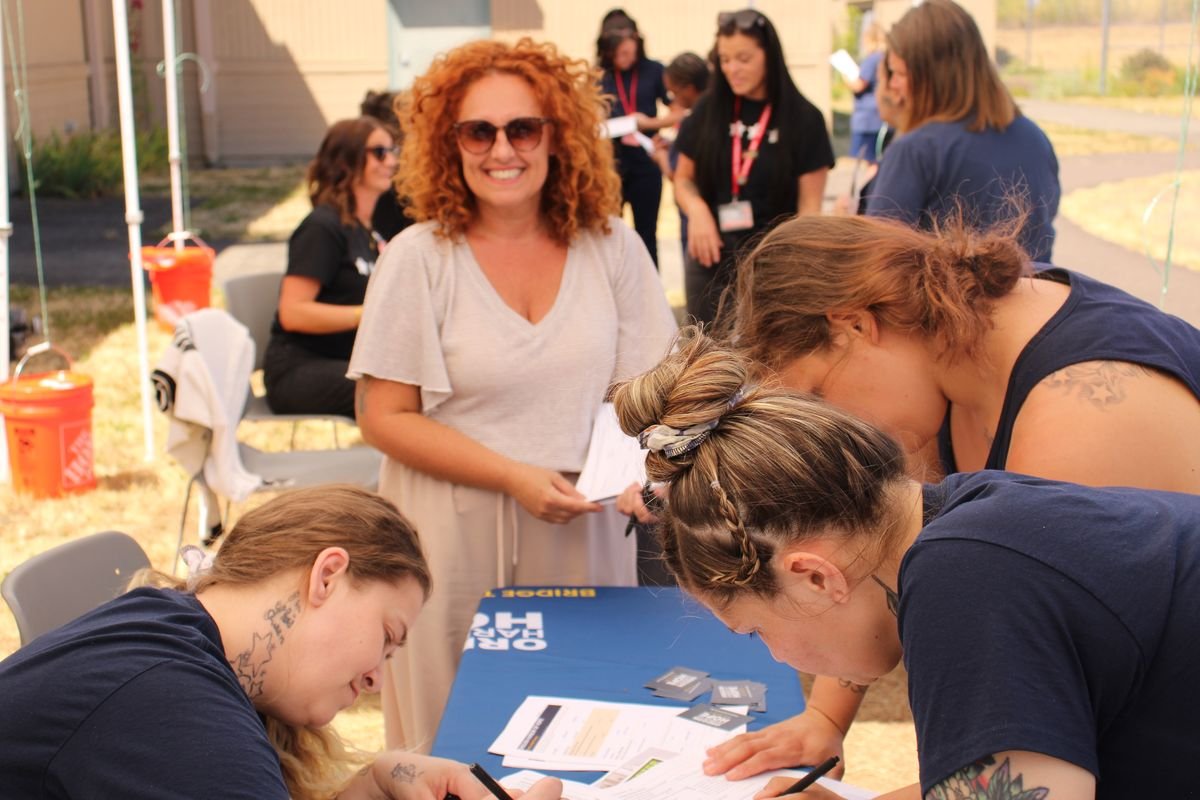
Customized support, funded and navigated.
First Step is a fund-and-navigate program. We pay for the basics that nobody else covers in the first ninety days, and a peer navigator makes sure each woman reaches the partner organizations that can carry her further. We do not duplicate services. We make sure she gets to the right ones.
We fund what nobody else funds, and we navigate the rest.
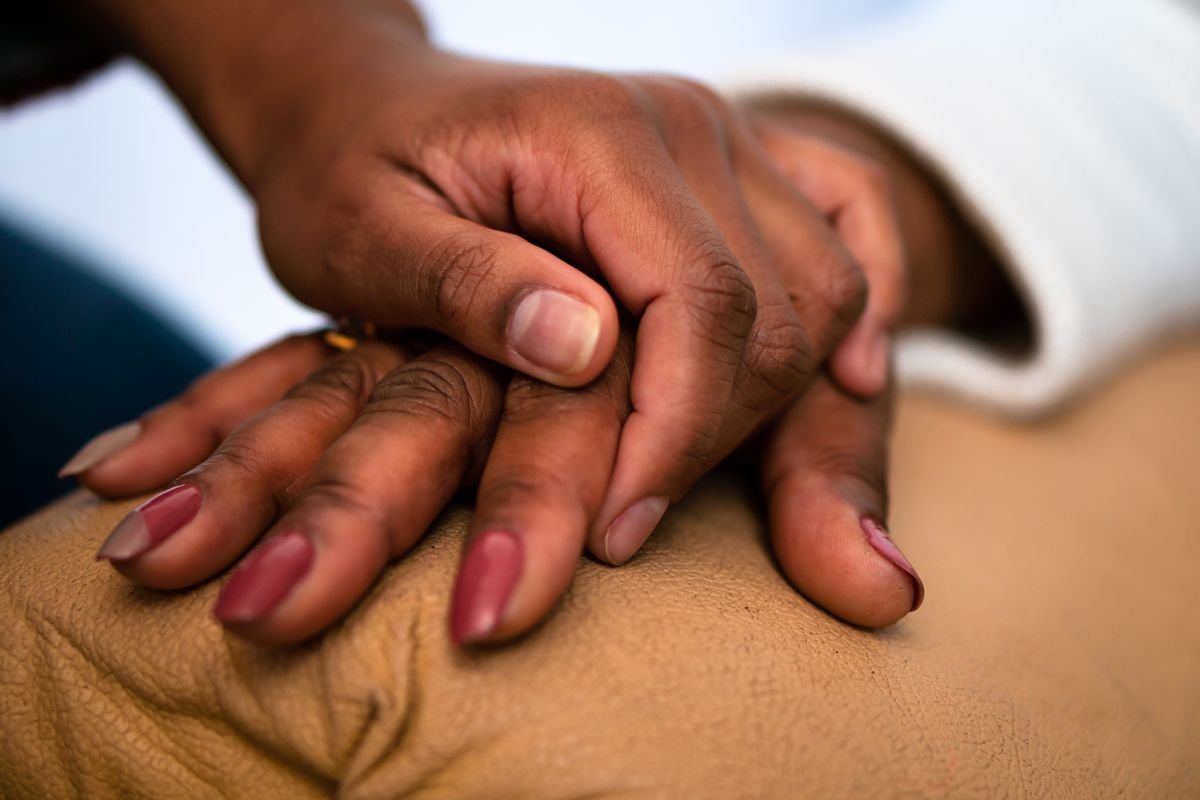
A person, not a case number
A peer navigator who has been through reentry herself, from the first meeting inside through every appointment outside.
A roof for the first three months
Housing paid for while she gets her footing, so the first decision she makes is not where to sleep tonight.
A phone and a way to get there
A phone with service and transportation, because no appointment, job interview, or parole check-in happens without them.
Emergency funds
Small amounts at the right moment, for the surprises that would otherwise send her back to the street.
Mentorship and emotional support
Someone to call when the day goes wrong, and someone to celebrate with when it goes right.
Training and employment readiness
Resumes, interviews, certifications, and introductions to employers who hire people with a record.
Warm hand-offs
Introductions, not referrals: we walk her into the partner organizations that provide treatment, long-term housing, and work.

Four steps, one navigator, one plan.
Pre-release engagement
The relationship starts inside. A woman can apply up to six months before her release date. We meet her, learn what she needs, and build her plan together so that nothing is decided for her on the day she walks out.
Day-of-release support
A ride from the gate. A phone with service. Clothes, food, and a safe place to sleep that night. A safety plan for the people and places she needs to avoid.
One-on-one navigation
Identification and benefits, Oregon Health Plan enrollment and health care, housing, employment readiness, training, life skills, and the warm hand-offs to partner organizations that make each of those real.
Long-term stabilization
Ninety days of intensive support, then a steady presence for up to twelve months, so the small setbacks that send women back to the street or back inside are caught early.
Apply, or refer a woman.
First Step serves women leaving Coffee Creek Correctional Facility after long-term incarceration who are returning to Multnomah, Clackamas, or Washington County. Applications are accepted up to six months before release, from the woman herself or from a case manager, counselor, parole officer, chaplain, or family member.
We review each application on:
- Release destination in Multnomah, Clackamas, or Washington County
- Length of incarceration
- Readiness to engage with a navigator and a plan
- Program capacity at the time of release
Our program is selective by design, so that every woman we take on gets the full support she was promised.
How to apply
From inside Coffee Creek: ask your transition coordinator or counselor to contact Oregon Harbor of Hope on your behalf, reach us through the Inside Out Network, or write to us at the address below.
Referring professionals and families: email us with the woman's name, expected release date, and release county, and we will follow up within a week.
info@oregonharborofhope.org
(503) 928-6920
Oregon Harbor of Hope
1616 NW 13th Ave
Portland, OR 97209
We measure First Step the way we ask Portland to measure everything.
We ask Multnomah County to judge its homeless programs by results, so we judge our own the same way. Every year we publish the same seven numbers for First Step that The Accountability Criteria ask of every program: how many women we served, how many stayed stable and housed, and what it cost.
Housing alone is not enough. Each woman has an individual plan with services coordinated from first contact through stability, which is Principle 3, Treat the Whole Person, in practice.
Read The Five Principles and The Accountability Criteria at the campaign page and fiveprinciplespdx.org.
The seven numbers we publish
- 1
Total number of persons served
- 2
Number of persons still in the program at year-end
- 3
Number of persons who exited the program, including those who left early and those who succeeded in becoming stabilized and housed
- 4
Success Rate: total persons stabilized & housed ÷ total persons exiting the program
- 5
Success Rate 1 Year Later: persons remaining stabilized and housed ÷ previous year's individuals stabilized and housed
- 6
Total annual program costs
- 7
Cost per person successfully stabilized and housed
Be the other door.
Many of the women we met at Coffee Creek are afraid that the only door open on release day leads back to the people and the life that put them there. First Step is built to be the other door. You can hold it open.